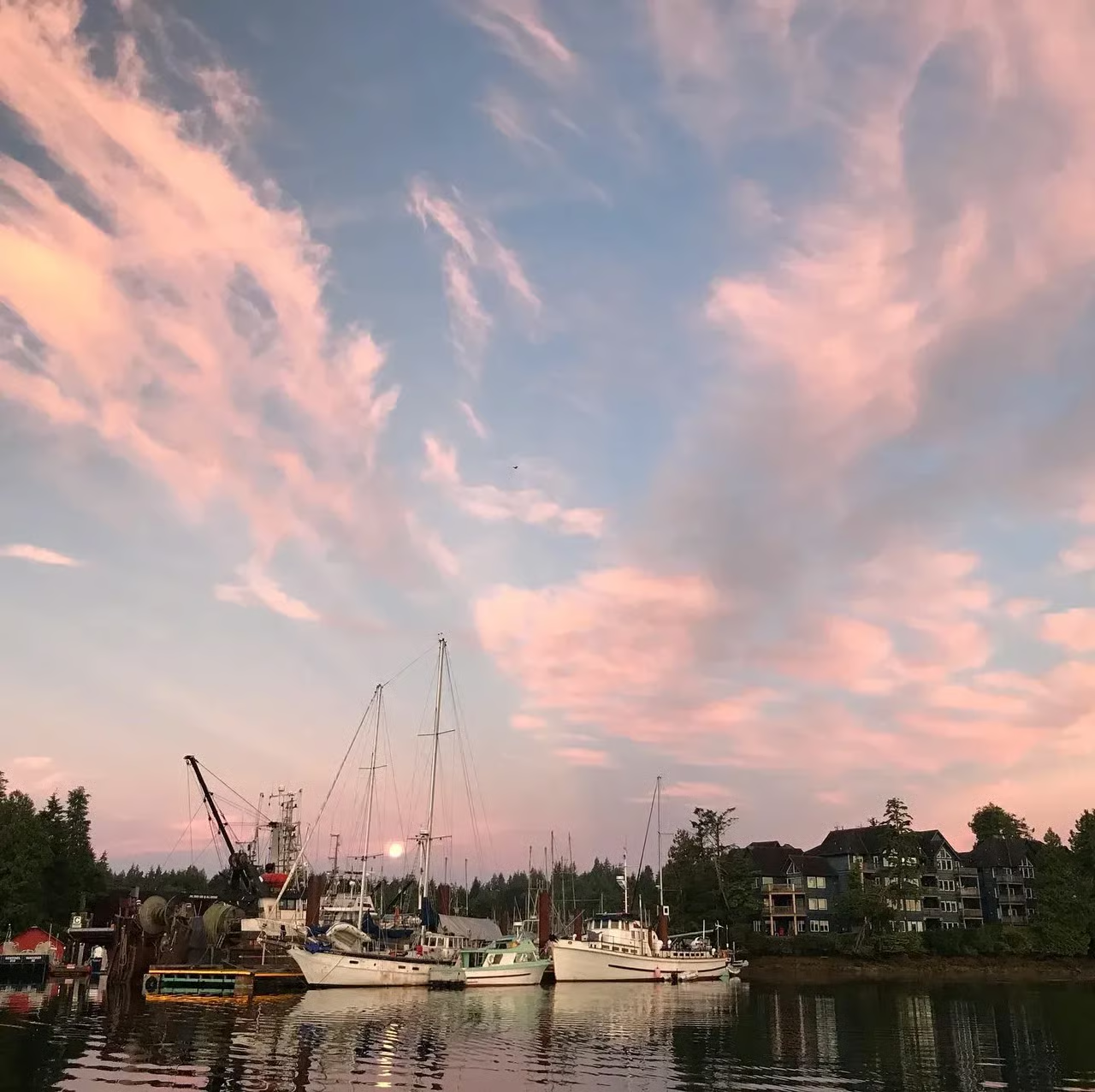
Ucluelet harbour glowing at sunset
Home/About

About Us

Embark On A Journey, Not Just A Charter

We are Maximum Coastal Adventures — a small, owner-run fishing charter born and raised on the wild edge of Vancouver Island. For us this was never just a business. It's a way of sharing the water we grew up on, the fish we chase every season, and the raw beauty of Ucluelet with the people who step aboard.

Headline Species
Chinook & Halibut
Lingcod and rockfish from April
Typical Chinook
5 – 20 lb
25–35 lb fish showing by May
Fishing Depth
80 – 200 ft
Deeper than summer — find the bait
Boat Traffic
Minimal
The water is basically yours
What Spring Looks Like

A Sound That Runs On Bait

Everything about spring here starts withherring. March is the month they arrive to spawn in Barkley Sound, and in recent years the heaviest concentrations have run from Ucluelet down toward Toquart Bay, through Newcombe Channel and around the Forbes and Stopper Islands.

That bait holds two kinds of Chinook.Feeder Chinook— the resident fish local anglers call blackmouth — are the dominant fishery from January right through April, stacked around the inshore islands, reefs and sandy flats at the entrance to the Sound. Behind them come thefirst migratory Chinookof the year, working their way down the west coast of Vancouver Island in March and April and stopping to feed on herring and needlefish before carrying on south.

Then April 1 arrives and the bottom fishery opens up. Halibut come into season, lingcod and rockfish open on the west coast, and a full day on the water can mean salmon in the morning and a reef at slack tide. By mid-May the halibut have moved onto the shallower banks where the feed is, and the big migratory kings are properly in.

Why it matters for you
Spring fish are the hardest-fighting salmon of the year — and you'll rarely share a spot with another boat.
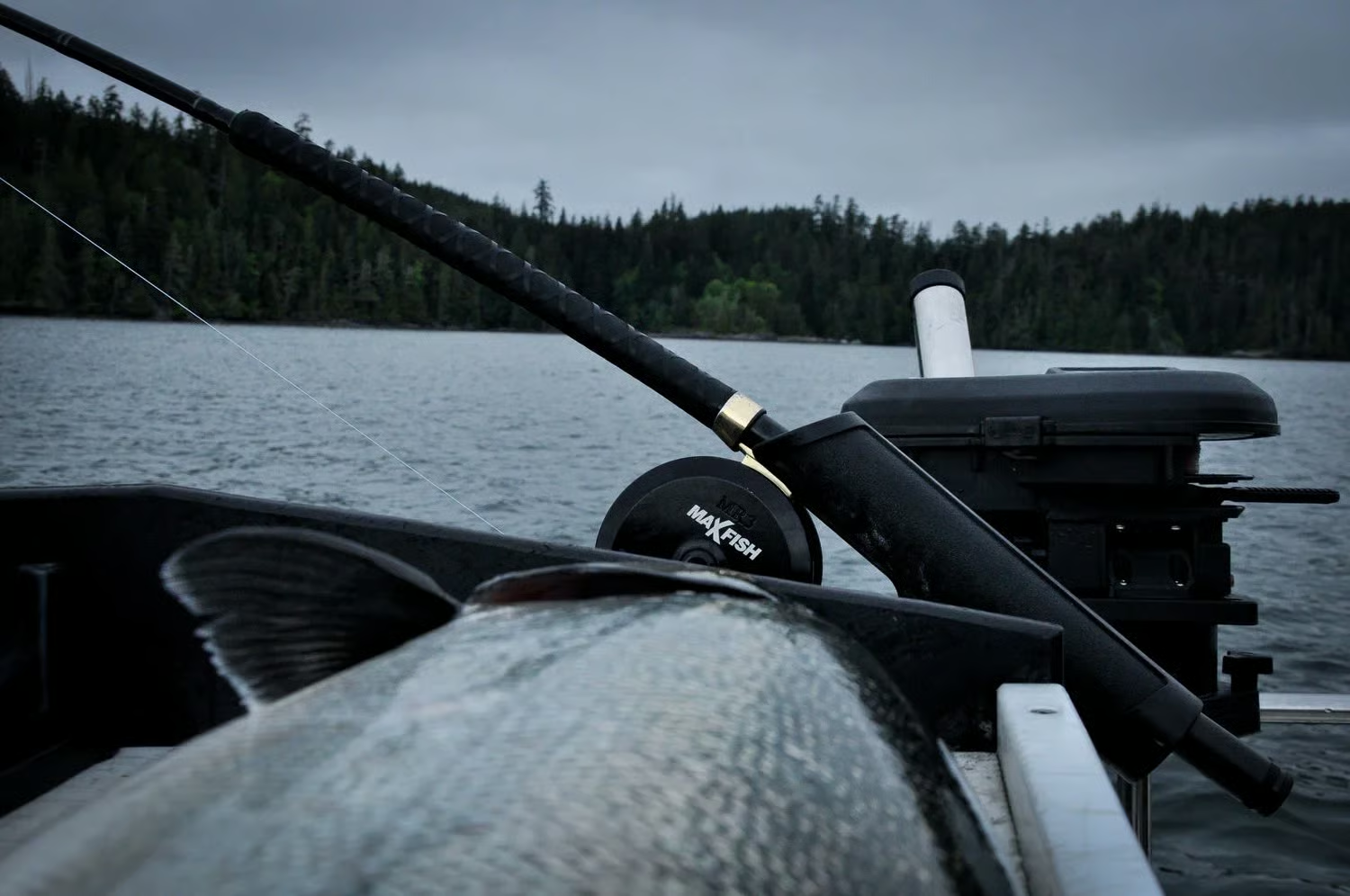
A spring Chinook alongside the boat in Barkley Sound
Early-season Chinook come out of cold water swinging — expect a real fight on light gear.
Month By Month

Three Very Different Months

Spring changes fast on this coast. Here's what's actually happening out there, and what we'll be targeting when you step aboard.

Month 01

March

The Herring Spawn
  • Herring arrive to spawn — March is the month. Ucluelet to Toquart Bay, Newcombe Channel, the Forbes and Stopper Islands.
  • Feeder Chinook are the main event, holding tight to bait on inshore islands, reefs and sandy flats.
  • The first migratory Chinook start showing off the coast — fish from seven to twenty pounds are not uncommon.
  • Prime prawn and Dungeness crab window in Area 23 — traps go down between trolls.
  • Winter storms are easing, but expect a few blown-out days. We'll pick your weather window.
Best for: numbers of feeder Chinook
Month 02

April

Everything Opens
  • Rockfish and lingcod open on the west coast on April 1 — the reefs are back in play.
  • Halibut season comes open, and the annual halibut limit resets with the new licence year on April 1.
  • Halibut can still be found unusually close to shore this early in the year.
  • Lingcod stack on jagged reefs and rock piles — vertical jigging is the fastest way to find them.
  • Feeder Chinook are at their biggest — April and May blackmouth can top thirty pounds.
Best for: a mixed-bag full day
Month 03

May

The Big Fish Arrive
  • Migratory Chinook move south in numbers and feed voraciously — many fish in the 25–35 lb range.
  • Herring and spawning needlefish are everywhere. Salmon and halibut are hunting the same bait.
  • From mid-May halibut settle on the shallower banks where the food is, and hold close to the Ucluelet islands.
  • Herring on a spreader bar, or a very slow troll, keeps working for halibut into early June.
  • Long daylight and settling seas mean we can cover far more water in a day.
Best for: size — your shot at a big one
Spring Target List

What You're Fishing For

Five things worth chasing between March and May, and where we go to find them.

SpeciesSpring outlookWhere we lookTypical size
Chinook — Feeder
Resident "blackmouth"
The dominant fishery from January through April. Strong all spring, biggest in April and May.Inshore islands, reefs and sandy flats at the entrance to Barkley Sound.5 – 20 lb
Some over 30
Chinook — Migratory
West coast run
First fish appear in March, build through April, and are properly in by May.Down the west coast and into the Sound, wherever the herring and needlefish are.7 – 20 lb
25–35 lb by May
Pacific Halibut
Season opens in April
Opens for the season on April 1. Close to shore early, then onto the banks from mid-May.Nearshore reefs and the Ucluelet islands early; offshore banks and rock piles later.Varies
Max retained size applies
Lingcod
Opens April 1
Closed through March, then open — and hungry. One of the best eating fish we land.Jagged reefs and rock piles. Vertical jigging with big white grubs.5 – 20 lb
Rockfish
Opens April 1
Opens alongside lingcod on the west coast. Retention rules are strict — we fish them carefully.The same structure as the lingcod, outside the Rockfish Conservation Areas.2 – 8 lb
Prawn & Dungeness Crab
Add-on to any charter
March and April are prime time in Area 23. Traps go down while we fish, come up before we run home.Sheltered water in and around the Broken Group.By the trap

Openings, daily limits and size limits are set by Fisheries and Oceans Canada and change in-season, sometimes at short notice. The dates above reflect how the season normally runs on this coast — we confirm current rules for your date before every trip.

Spring Grounds

Where We Point The Boat

Barkley Sound is DFO Area 23; the more open water seaward of it is Area 123. In spring we spend most of our time inside, close to the bait.

01

Entrance To Barkley Sound

Inshore islands, reefs and sandy flats where feeder Chinook concentrate on herring and needlefish. Our bread and butter in March.

02

The Broken Group Islands

Protected water when the swell is up. When the open coast is unfishable, the Broken Group usually isn't — and it's spectacular.

03

Toquart Bay & Newcombe Channel

Where the March herring have shown up most reliably in recent years. Find the spawn, find everything that eats it.

04

Forbes & Stopper Islands

More classic spring herring ground, and a short run from the launch when the weather is marginal.

05

The Ucluelet Islands

Early-season halibut hold surprisingly close to home, mopping up after the spawn. Minimal running, maximum fishing.

06

The Offshore Banks

Weather-dependent, and worth it. From mid-May the halibut settle onto the shallower banks where the feed piles up.

How We Fish It

Spring Tackle & Technique

All of it is aboard and rigged before you arrive. This is just so you know what's coming.

Troll Deep, Find The Bait

Spring fish sit well below where you'd look in August — anywhere from 80 to 200 feet depending on the spot, and often 80 to 120 right off the rock walls. The sounder does the work: find the bait ball, and the salmon are in it.

Spoons, Hoochies, Big Bait

Herring-aid spoons, needlefish hoochies and the white AORL 12 all earn their keep in spring. A whole herring or anchovy is a very good idea this time of year — the fish are eating big bait, so we give them big bait.

Halibut On The Bottom

Herring or salmon parts on a spreader bar is the go-to through April, May and into early June, and a very slow troll takes fish too. Early on we can work close to shore; by mid-May we're on the banks.

Jigging The Reefs

Once lingcod open in April, a big white grub jigged vertically over a jagged reef or rock pile is about the most reliable fishing of the whole spring. Great sport on light gear, and the best fish tacos you'll eat.

Licences & Limits

The Rules, Plainly

You don't need to memorise any of this — your guide handles it. But spring has a few quirks worth knowing before you arrive.

  • Everyone needs a BC tidal waters licence

    Buy it before you arrive and bring it aboard. If you plan to keep salmon, you'll also need a Salmon Conservation Stamp on it.

  • The halibut year turns over on April 1

    Halibut carry a daily limit, an annual aggregate limit tied to the licence year — April 1 to March 31 — and a maximum retained size. Every halibut you keep must be recorded on your licence or app immediately.

  • Barbless hooks for all salmon fishing

    Required in both Area 23 and Area 123. Everything on our boats is already rigged that way.

  • Area 23 and Area 123 don't always match

    Limits are set separately for the inshore Sound and the seaward water outside it, and a species open in one can be closed in the other on the same day. Your guide knows which side of the line we're on and keeps your catch legal automatically.

  • Rockfish get handled with care

    Rockfish Conservation Areas are closed to bottom fishing, and a descending device is carried and rigged for immediate use so released fish go back down properly.

Pack For Spring

The fishing is superb and the water is still cold. Dress for a March morning, not a July afternoon — you can always shed a layer.

  • Warm layers you can peel off
  • Waterproof outer shell
  • Toque and light gloves
  • Non-slip footwear
  • Polarised sunglasses
  • Sunscreen — it reflects
  • Your fishing licence
  • Snacks, drinks, a camera

Rods, reels, tackle and bait are all included. Current openings and limits for Areas 23 and 123 are published byFisheries and Oceans Canada— and we check them before every trip.

Ucluelet harbour glowing at sunset
Ready When You Are

Come Fish With Us

Pick your trip, and let a local put you on the fish. From the thrill of the chase to a prized catch, we'll guide your journey on the wild West Coast.

We use cookies to improve your experience and deliver personalized content. By using our website, you agree to our Cookie Policy.
Got it